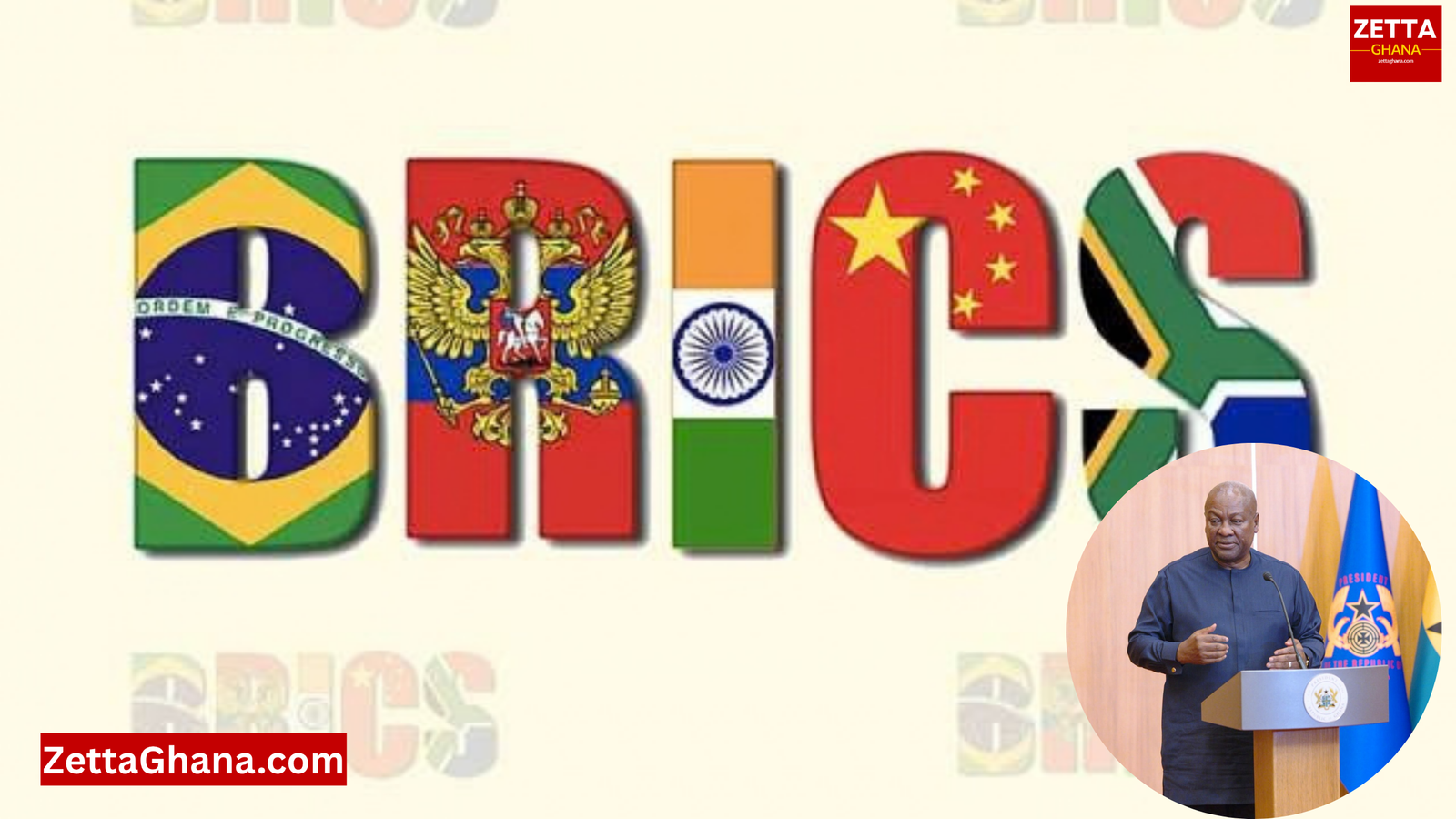
President John Dramani Mahama has said Ghana’s bid to join BRICS is aimed at expanding its international development partnerships while strengthening cooperation among countries in the Global South.
He made the remarks on Friday, October 16, 2026, at Jubilee House in Accra, during the commissioning of new ambassadors to Angola, Qatar and Israel, as well as Ghana’s Permanent Mission to the United Nations.
“Ghana’s decision to apply for partnership with the BRICS countries reflects our determination to broaden our development partnerships and deepen South-South cooperation,” he said.
Mahama stressed that pursuing new partnerships would not come at the expense of Ghana’s longstanding relationships with traditional allies.
He said the country was seeking wider opportunities for trade, investment, industrialisation and value addition while maintaining its existing diplomatic and economic ties.
“I explain this approach clearly as we seek wider opportunities for trade, investment and industrialisation and also value addition, while sustaining our longstanding relationships and working relations with our traditional partners,” he added.
Foreign Affairs Minister Samuel Okudzeto Ablakwa announced on October 6, 2026, that Cabinet had approved Ghana’s formal application to join the bloc. He announced this at a joint press briefing with visiting Indian External Affairs Minister Dr Subrahmanyam Jaishankar.
Ablakwa explained that Ghana would initially seek Partner Country status, with the possibility of progressing to full membership depending on the results of the partnership.
He said the initiative aligns with President Mahama’s New Economy agenda, which seeks to move Ghana from economic stabilisation towards transformative growth.
The agenda is built around seven pillars, including job creation, investment, industrialisation and resource sovereignty.
BRICS has 11 full members following its expansion in 2024 and 2025: Brazil, China, Egypt, Ethiopia, India, Indonesia, Iran, Russia, Saudi Arabia, South Africa and the United Arab Emirates.
Ten countries, including Nigeria and Uganda, hold partner status, while about 40 countries have expressed interest in joining and 23 have submitted formal applications.