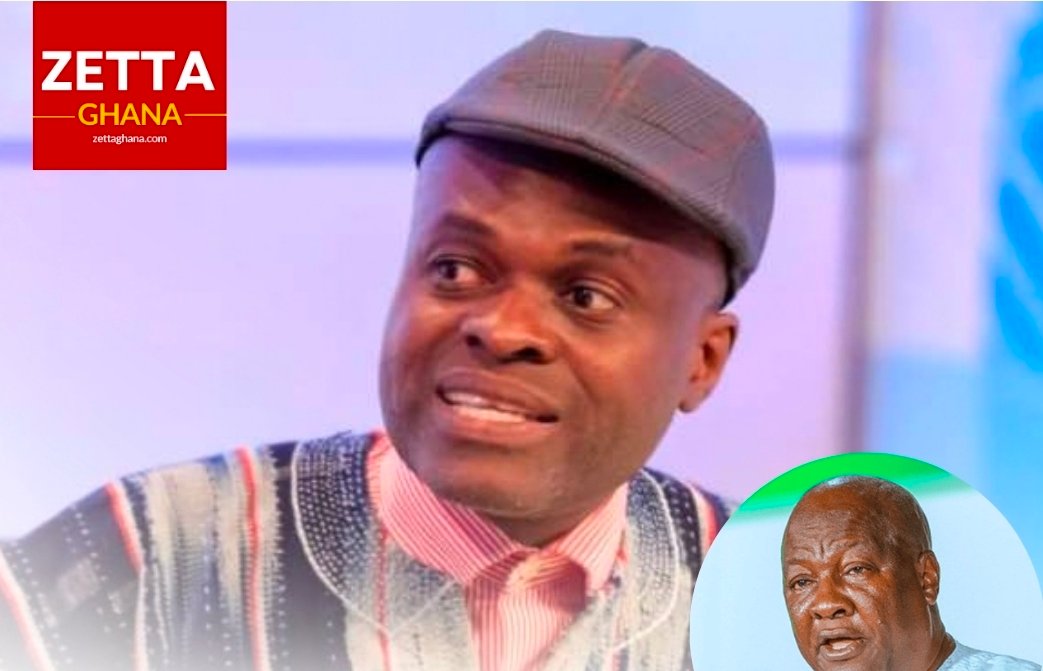
Private legal practitioner Martin Kpebu has criticised President John Dramani Mahama over the appointment of Emelia Affi Agbenyo as Deputy Chairperson of the Electoral Commission (EC), describing the decision as a “race to the bottom” and a departure from the President’s promised reset agenda.
Speaking on TV3’s weekend current affairs programme, Key Points, on Saturday, October 17, 2026, Mr Kpebu questioned the rationale behind the appointment, arguing that it undermines the principle of political neutrality that should guide the composition of the country’s electoral management body.
“This one is a reset in reverse; that is not the legacy,” he said, expressing disappointment over the President’s decision.
Mr Kpebu also suggested that the appointment was inconsistent with Mr Mahama’s political image and the expectations associated with his reset agenda.
“This is a strong race to the bottom. I am not sure that after a year I will continue to support JM. This appointment doesn’t look like him, the reset he promised,” he stated.
Kpebu Questions Mahama’s Previous Position on EC Appointments
The lawyer’s criticism centres on what he considers an inconsistency between President Mahama’s current decision and his previous opposition to appointments perceived to be politically partisan.
According to Mr Kpebu, Ghana had reached a point where efforts were needed to insulate the Electoral Commission from partisan political affiliations to strengthen public confidence in the institution.
He recalled the criticism directed at former President Nana Addo Dankwa Akufo-Addo over the appointment of individuals accused of having political affiliations to the Commission.
Mr Kpebu argued that the concerns raised during the previous administration should have informed the approach adopted by the current government.
“We made all the noise against Akufo-Addo’s appointment. In 2024, the NDC raised issues against the director of the EC; we were here making all the noise,” he said.
His argument is that political leaders should apply the same standards to appointments made under their administrations as they demanded when they were in opposition.
Controversy Over Affi Agbenyo’s Political Background
The appointment of Ms Agbenyo has attracted criticism because of her previous involvement in the National Democratic Congress (NDC) campaign.
The Coalition of Domestic Election Observers (CODEO) has also raised concerns about the appointment, citing her documented political activities during the 2024 general election campaign.
According to CODEO, Ms Agbenyo served as a governance-sector spokesperson for the NDC during the party’s 2024 election campaign. The organisation argues that such political associations could undermine public confidence in the Electoral Commission’s independence and impartiality.
CODEO has called on Ms Agbenyo to resign, maintaining that the credibility of the Commission depends not only on the actual neutrality of its officials but also on the public’s confidence in their ability to act impartially.
Mr Kpebu has backed the call for her resignation, arguing that the appointment could weaken the independence of the electoral body.
However, the concerns raised by CODEO and Mr Kpebu relate primarily to political affiliation and public perception of neutrality, rather than an established finding that Ms Agbenyo has acted improperly in office.
Mahama’s Earlier Criticism Resurfaces
The controversy has revived President Mahama’s previous position on politically affiliated appointments to the Electoral Commission.
In March 2023, while in opposition, Mr Mahama criticised the appointment of individuals he described as known party activists to the Commission. He also called for reforms to Article 43(2) of the 1992 Constitution to require parliamentary approval for the appointment of EC commissioners.
CODEO has cited those earlier comments in arguing that the principles advocated by the President in opposition should also guide his decisions in government.
The debate therefore goes beyond Ms Agbenyo’s appointment to raise broader questions about how Ghana selects officials for independent constitutional institutions.
Critics argue that political leaders should avoid appointments that could create doubts about the neutrality of electoral administrators, regardless of the party in power.
Debate Over the Independence of the Electoral Commission
The Electoral Commission plays a central role in Ghana’s democracy, overseeing elections and other electoral processes through which citizens exercise their constitutional right to choose their leaders.
Public confidence in the Commission’s impartiality is therefore essential to the credibility of the electoral process.
President Mahama, during the swearing-in of Ms Agbenyo and fellow Deputy Chairperson Joseph Kwaku Asamoah on October 12, 2026, urged the newly appointed officials to discharge their responsibilities independently and impartially.
He stressed that neither he nor his administration should receive preferential treatment from the Commission and directed the officials to apply the law equally to all political parties and candidates.
The appointments have nevertheless intensified debate over whether Ghana’s existing appointment procedures provide sufficient safeguards against perceptions of partisan influence.
While the President makes such appointments on the advice of the Council of State under the constitutional framework, critics are calling for broader reforms to strengthen transparency and public confidence.
Mr Kpebu’s comments add to growing scrutiny of the appointments, with the central question being whether political leaders can consistently uphold the standards of neutrality and independence they previously demanded of their opponents.
The controversy is likely to keep the independence of the Electoral Commission at the centre of Ghana’s political debate as stakeholders continue to examine the balance between constitutional appointment powers and the need for public confidence in electoral institutions.